
Latest articles by Keith Cooper

The James Webb Space Telescope's strange "little red dots" may be evolving into spiral galaxies.

Astronomers may have already scanned millions of more stars than they thought, a realization that might lead to new ways to hunt for extraterrestrial radio signals.

Sophisticated high-contrast imaging has revealed asteroid 44 Nysa to have three lobes and a small moon.
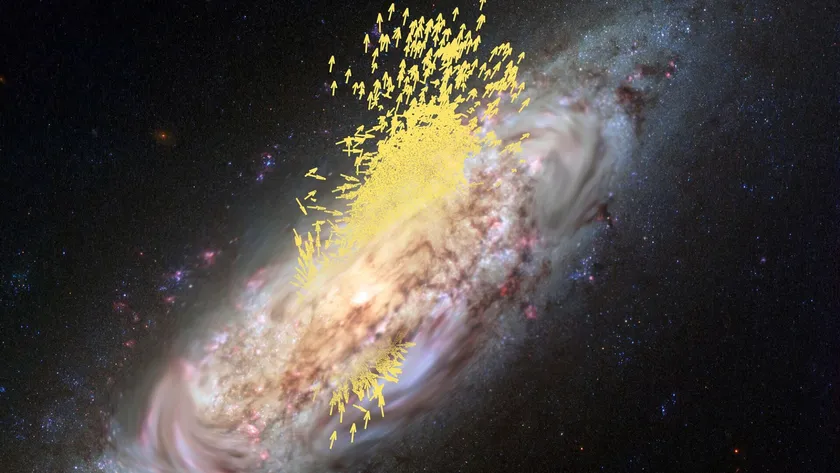
A slowly rotating stellar halo was the clue to a major and unknown event in the Milky Way's history that saw the spiral disc flip over by more than 90 degrees.

Between biosignatures and technosignatures lie noosignatures, and some scientists think they could help us find alien life someday.

New research suggests AI can be repeatedly fooled into mistaking non-life for life.

Evidence for landslides down steep crater walls on Pluto have been found in imagery from NASA's New Horizons mission.

The first of 10,000 missing black holes in the Omega Centauri globular cluster has been found thanks to teamwork by the Hubble and James Webb space telescopes.

A portable X-ray device has been used successfully in orbit for the first time, promising X-ray diagnosis of everything from broken bones to ripped spacesuits and damaged satellites.

Sub-Neptune exoplanets could have atmospheres so dense and crushing that rock is vaporized to form clouds that trap heat at the surface of the planet.

NASA's Parker Solar Probe has found charged grains of dust being carried on magnetic plasma waves in the Sun's outer atmosphere, providing a new clue to the mystery of the Sun's corona is so hot.

Observations of the fast-moving interstellar comet with the Very Large Telescope in Chile support similar observations made by the JWST.

Astronomers have detected radio signals coming from a long-dead neutron star known as the 'Blue Eye Pulsar' after searching for decades.

Astronomers discovered a planet 25 light-years away that orbits within the habitable zone of its star that could potentially support liquid water and possibly life.

Deep oceans of magma once sloshed about inside the crust of Mars, seismic measurements taken by NASA's InSight mission suggest.

Optical telescopes have come a long way in the past two-and-a-half centuries — from the homemade telescope of William Herschel to the orbiting Hubble Space Telescope.

A supermassive black hole is also coming together at the heart of this galaxy maelstrom.

A faraway galaxy has been caught blowing away the cosmic fog of hydrogen that filled the universe once upon a time.

Terzan 5 is a globular cluster with some unusual properties that have led a team of astronomers to suspect that it is more than meets the eye.

Evidence of chemical alteration by liquid water has been found on the asteroid Donaldjohanson, which formed further from the sun before being shoved inwards.
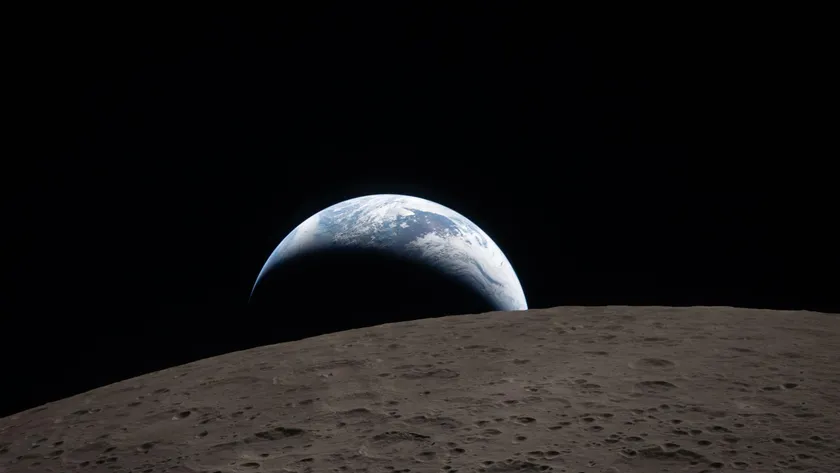
A laser system, previously tested on board the International Space Station, helped to stream video directly from the Artemis 2 mission on its way around the moon.

An autonomous rolling rover that was able to transform from a sphere into a robot successfully explored a small part of the moon in 2024.

The quasar existed 12.9 billion years ago and shows that supermassive black holes were able to age rapidly in the early universe.

If and when SETI discovers alien life, then a revised Declaration of Principles guarantees that once the discovery has been verified, its disclosure will come soon thereafter.
