




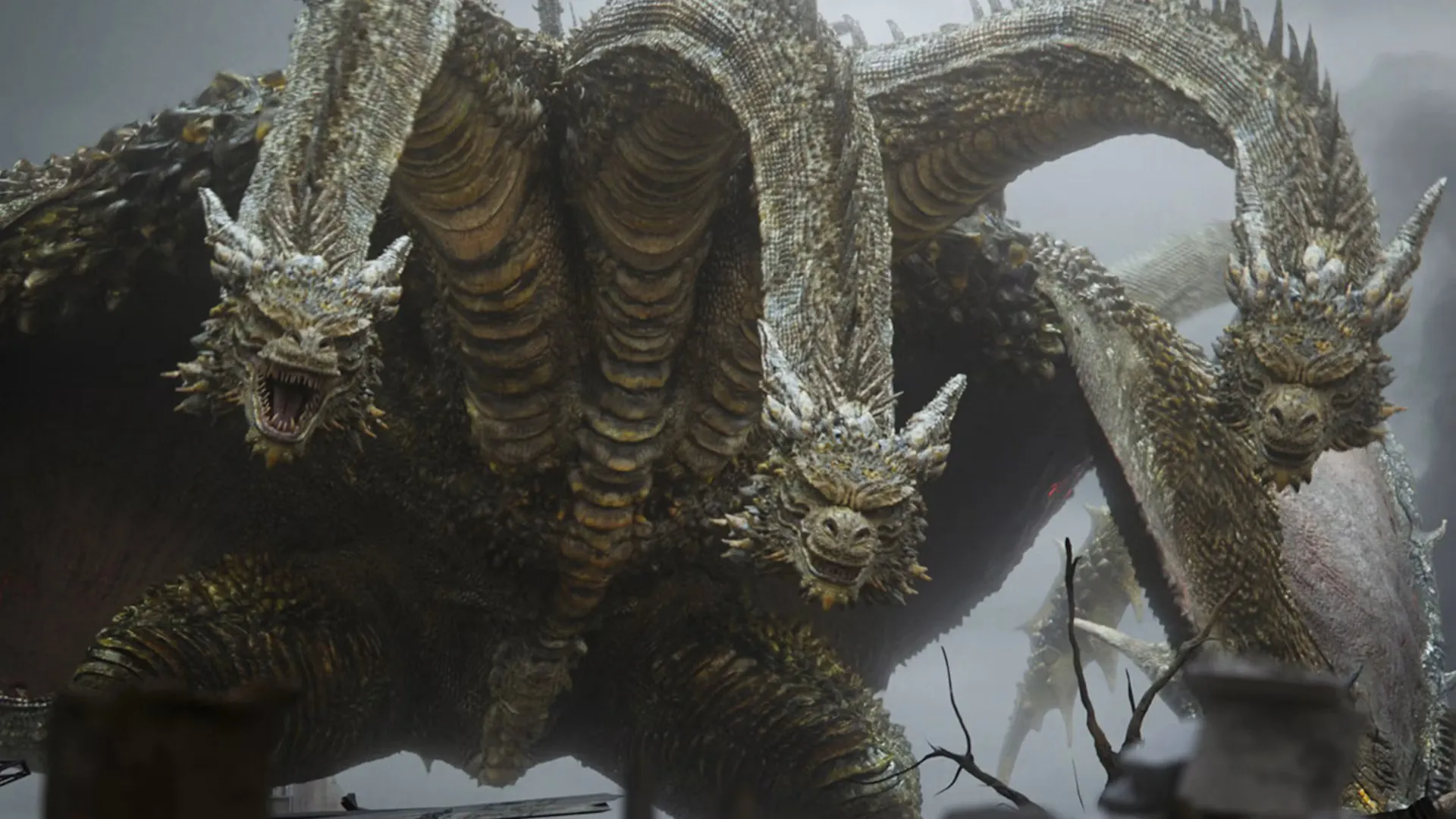
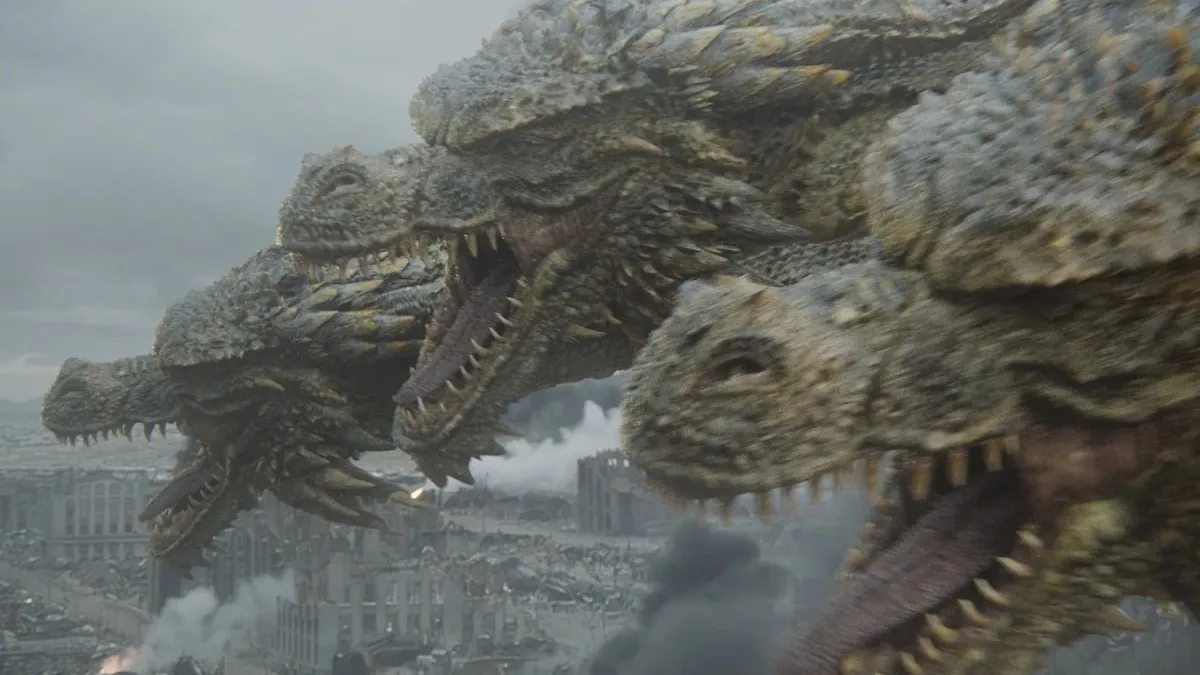
Godzilla goes toe-to-toe with long-time foe King Ghidorah in Godzilla Minus Zero, which opened in theaters on Friday (Nov. 6). Though the three-headed golden Kaiju might seem like a natural native of Monster Island, King Ghidorah actually emerged from the depths of space.
However, it isn't just the origins of King Ghidorah — also known as Monster Zero in the Godzilla movie Invasion of Astro-Monster (1965) — that are this beast's only cosmic connection. One of the largest structures in the universe, the King Ghidorah Supercluster, was named in honor of Godzilla's primary antagonist.
Eat that, King Kong!
King Ghidorah and Godzilla
King Ghidorah is a three-headed, twin-tailed golden dragon from the stars, first introduced in the fifth Godzilla movie, Ghidorah, the Three-Headed Monster (1964).
In this first appearance, part of the Shōwa era (1964–1975) of Godzilla history, Ghidorah ravaged Venus, wiping out its population 5,000 years before arriving on Earth encased within a highly magnetic meteorite. Ghidorah was bested this first time by Godzilla, Rodan, and Mothra.
Undeterred, Ghidorah returned for a rematch just a year later in Invasion of Astro Monster (1965), after being discovered supposedly terrorizing the inhabitants of Planet X, a world found beyond Jupiter. In this movie, it is revealed that Ghidorah is less a king and more a pawn, under the control of calculating Xiliens as part of a plan to subjugate Earth. This will become a theme.
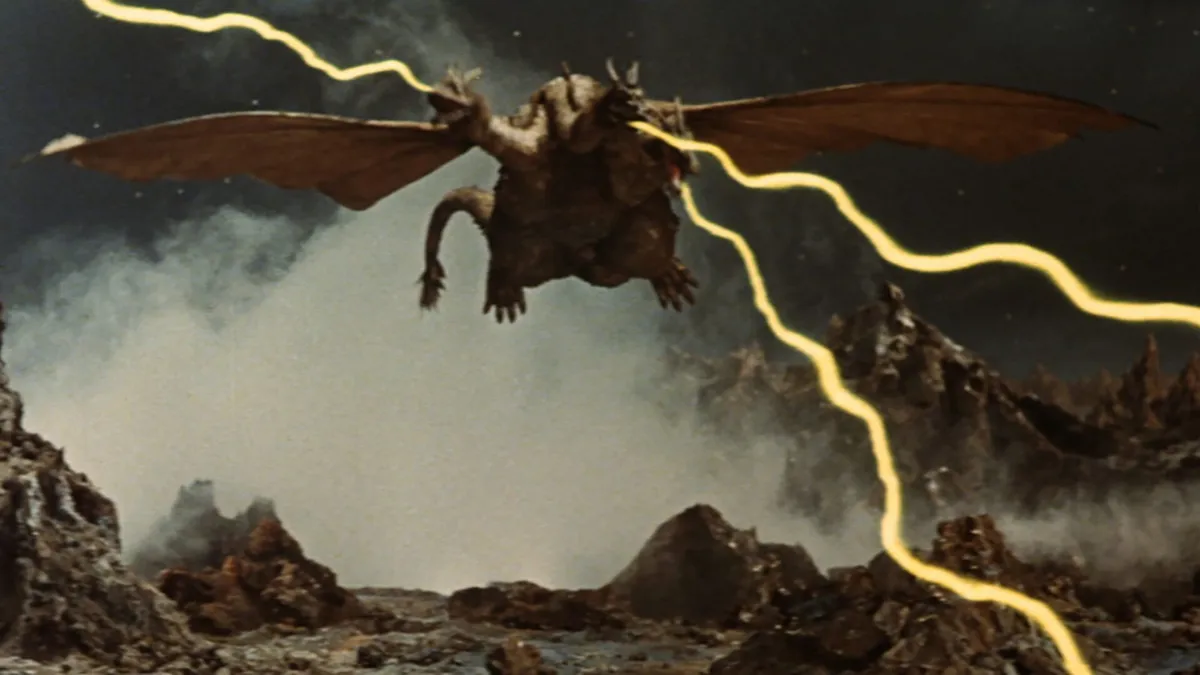
Freed from that control, Ghidorah returns to deep space, once again falling under the thrall of an alien race in 1968's Destroy All Monsters.
This movie sees Ghidorah hold its own against a who's who of kaiju, eventually succumbing to the combined might of Godzilla, Minilla, Mothra, Rodan, Manda, Gorosaurus, Anguirus, Kumonga, Baragon, and Varan.
Even with three gravity-beam-blasting heads, that is hardly fair!
Ghidorah returned with some backup for a final time in the Shōwa era in 1975's Godzilla vs. Gigan. This time, Ghidorah and his tag-team partner Gigan (who resembled a giant one-eyed space chicken) were under the control of cockroach-like Nebulans. Getting mind-controlled three times is just embarrassing!
Fortunately, the Shōwa era drew to a close in 1975 before Ghidorah was forced into servitude for a fourth time.
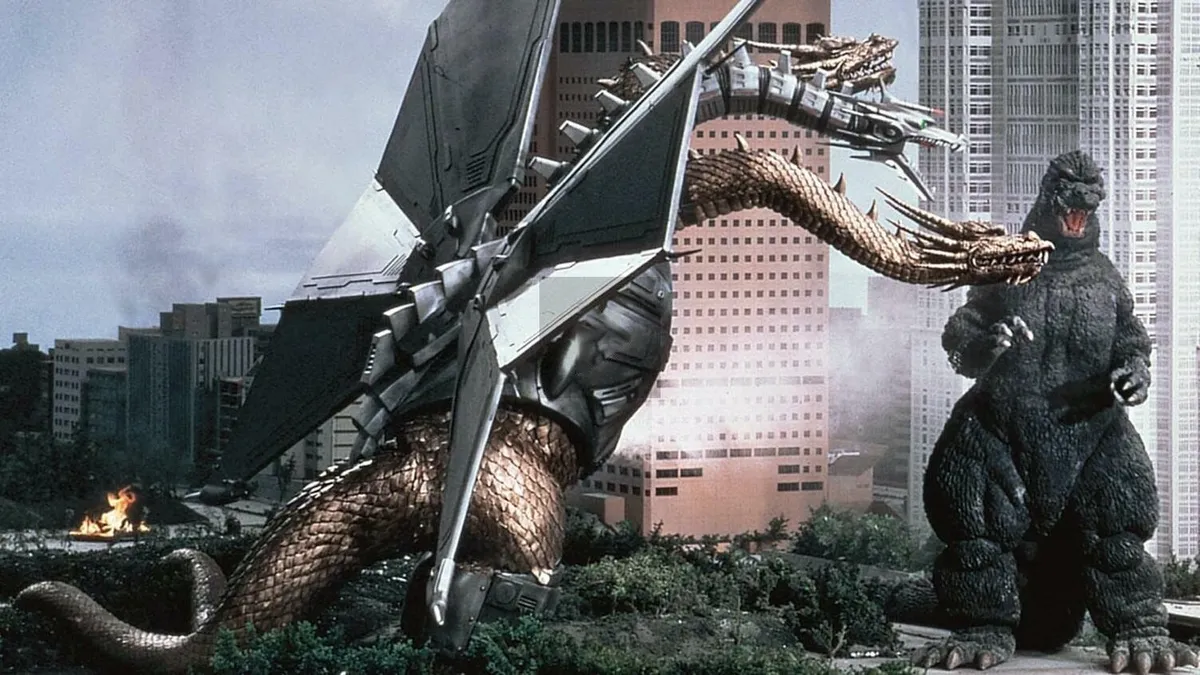
Ghidorah returned in the rebooted Godzilla timeline of the Heisei era (1991–1998) in 1991's Godzilla Vs. King Ghidorah, but its cosmic origins are gone. The Heisei Ghidorah begins life as three genetically engineered creatures called Dorats in the future before being morphed into a three-headed form via nuclear exposure.
Ghidorah was given a spiritual origin in the Millennium era's Godzilla, Mothra, and King Ghidorah: Giant Monsters All-Out Attack (2001), actually serving as a protagonist, helping Mothra in halting Godzilla's rampage.
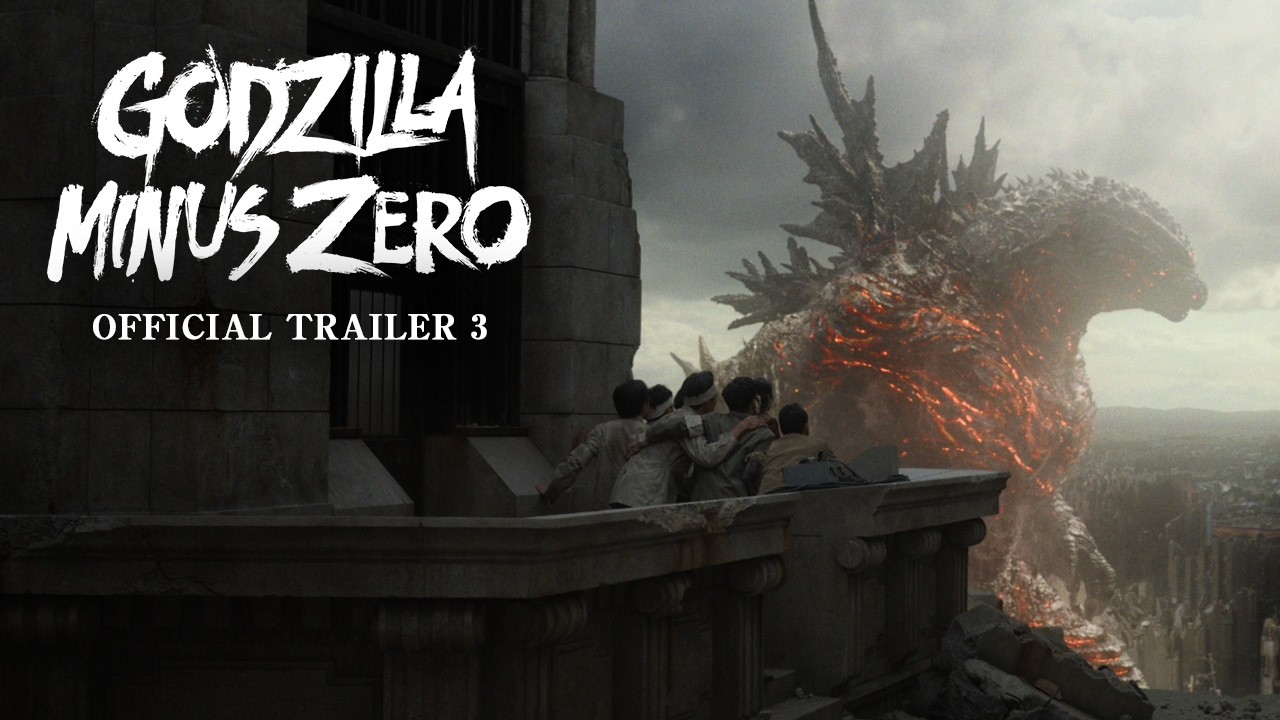
Ghidorah is once again an extraterrestrial in Universal Pictures' MonsterVerse movie Godzilla: King of the Monsters (2019), being described as having "fallen from the stars" in ancient times before rising to challenge Godzilla.
Now King Ghidorah is back once again in Godzilla Minus Zero, maintaining his extraterrestrial origin story and once again challenging Godzilla to an epic kaiju battle.
Those are some of the fictional versions of this golden beast, but what does it look like in reality?
The real King Ghidorah!
Arguably the most impressive feat of King Ghidorah has been to make itself such an important part of pop culture that astronomers took note.
The King Ghidorah supercluster is a collection of galaxies located around 6.7 billion light-years from Earth. Covering an area of the sky equivalent to 19 full moons, as seen from our vantage point, this cosmic Kaiju was discovered in late 2022 by Japanese astronomers using data from the Subaru Telescope.
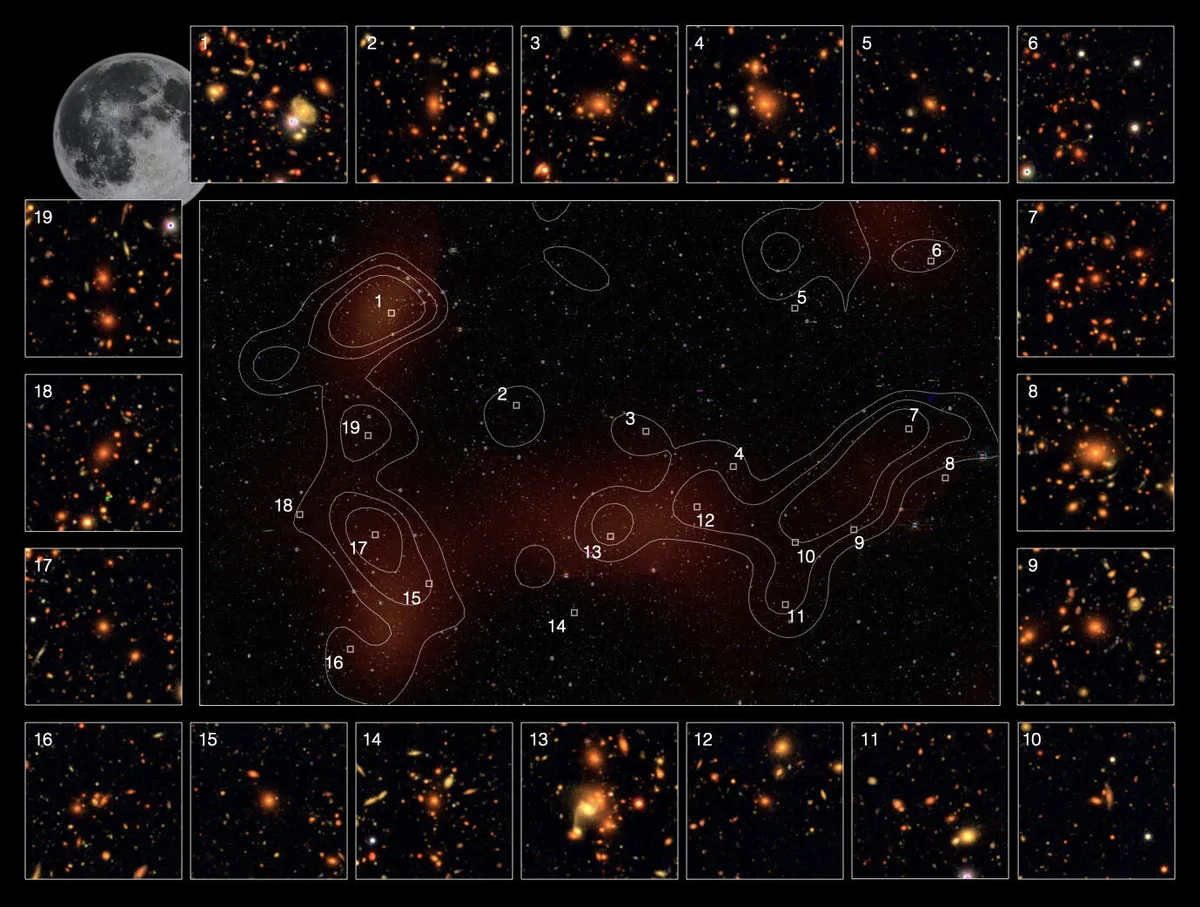
The King Ghidorah supercluster is comprised of at least 19 individual associated galaxy clusters. It stretches out for an incredible 1.3 billion light-years, meaning the entire Milky Way could fit across it around 12,300 times. That makes it the largest supercluster ever discovered.
To put into context just how monstrous the King Ghidorah supercluster is, consider the fact that it has a mass equivalent to 10,000,000,000,000,000 suns, 10 times as massive as the Milky Way's home supercluster, Laniakea.
Even Godzilla may think twice before attempting to tussle with that particular King Ghidorah!
See King Ghidorah in action in Godzilla Minus Zero, which is showing in theaters in the US and UK from November 6. You can see the preceding movie, Godzilla Minus One, on Netflix.