





Rocket Lab launched its 99th mission to date today (Nov. 2), sending a private Japanese Earth-observing satellite toward orbit.
An Electron rocket lifted off from Rocket Lab's New Zealand site today at 11:41 a.m. EST (1641 GMT; 5:41 a.m. on Nov. 3 local New Zealand time).
The mission, which Rocket Lab calls "The Sea God Surveys," is carrying an Earth-observing radar satellite to low Earth orbit (LEO) for the Japanese company iQPS. All went according to plan: The spacecraft was deployed at an altitude of 357 miles (575 kilometers), Rocket Lab announced about 56 minutes after launch.

"The Sea God Surveys" was Rocket Lab's 10th launch to date for iQPS, which is assembling a constellation of three dozen synthetic aperture radar (SAR) satellites in LEO.
SAR satellites offer advantages over those that view our planet in optical wavelengths. They can peer through cloud cover, for example, and study our planet at night as well as during the day.
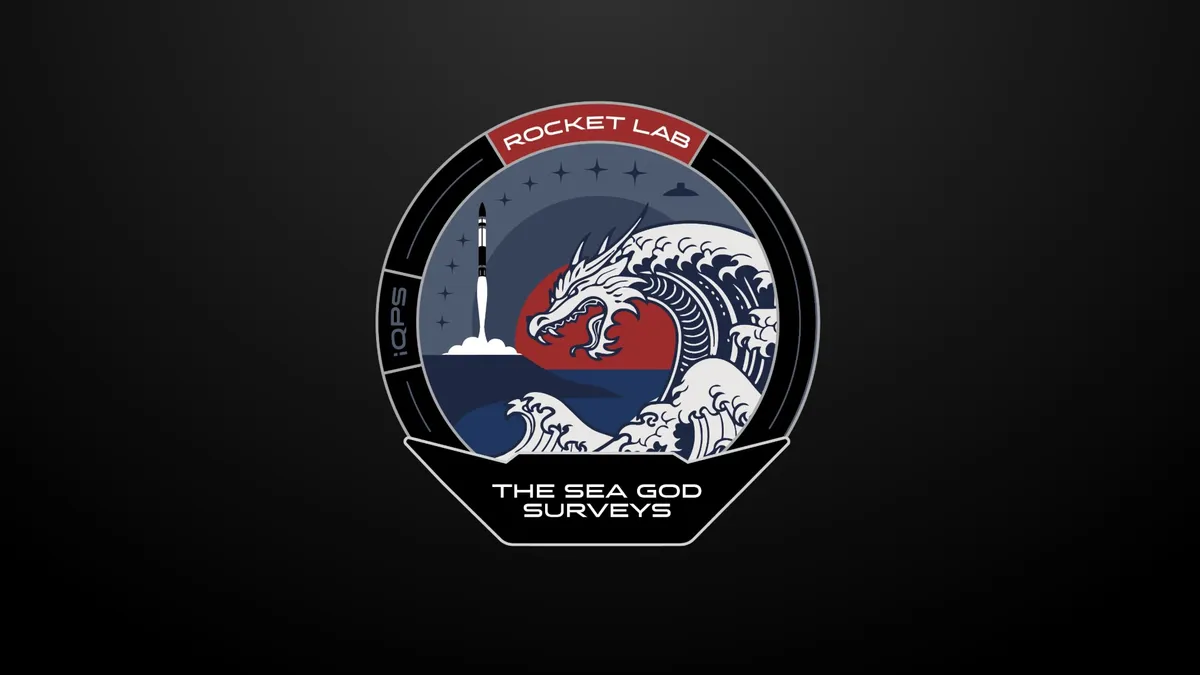
Today's launch was the 99th overall for Rocket Lab and the 90th for the two-stage, 59-foot-tall (18 meters) Electron, which gives small satellites dedicated rides to space. The workhorse vehicle has now flown 17 times this year.
Rocket Lab's other nine launches to date have been conducted by HASTE, a suborbital version of Electron that allows customers to test their tech in the hypersonic flight environment. HASTE (short for "Hypersonic Accelerator Suborbital Test Electron") debuted in June 2023 and generally flies classified payloads.
Editor's note: This story was updated at 11:55 a.m. ET on Nov. 2 with news of successful launch, then again at 1 p.m. EST with news of successful satellite deployment.